This started as a solo effort — a self-awareness based leadership framework for mid-career personnel. It became something bigger once I got out and actually talked to people. Sitting through our winter retreat, meeting with a committee already drafting a probationary mentorship proposal, and interviewing personnel across ranks made one thing obvious: three separate efforts were forming independently around the same need. Instead of adding a fourth, this project became the connective work.
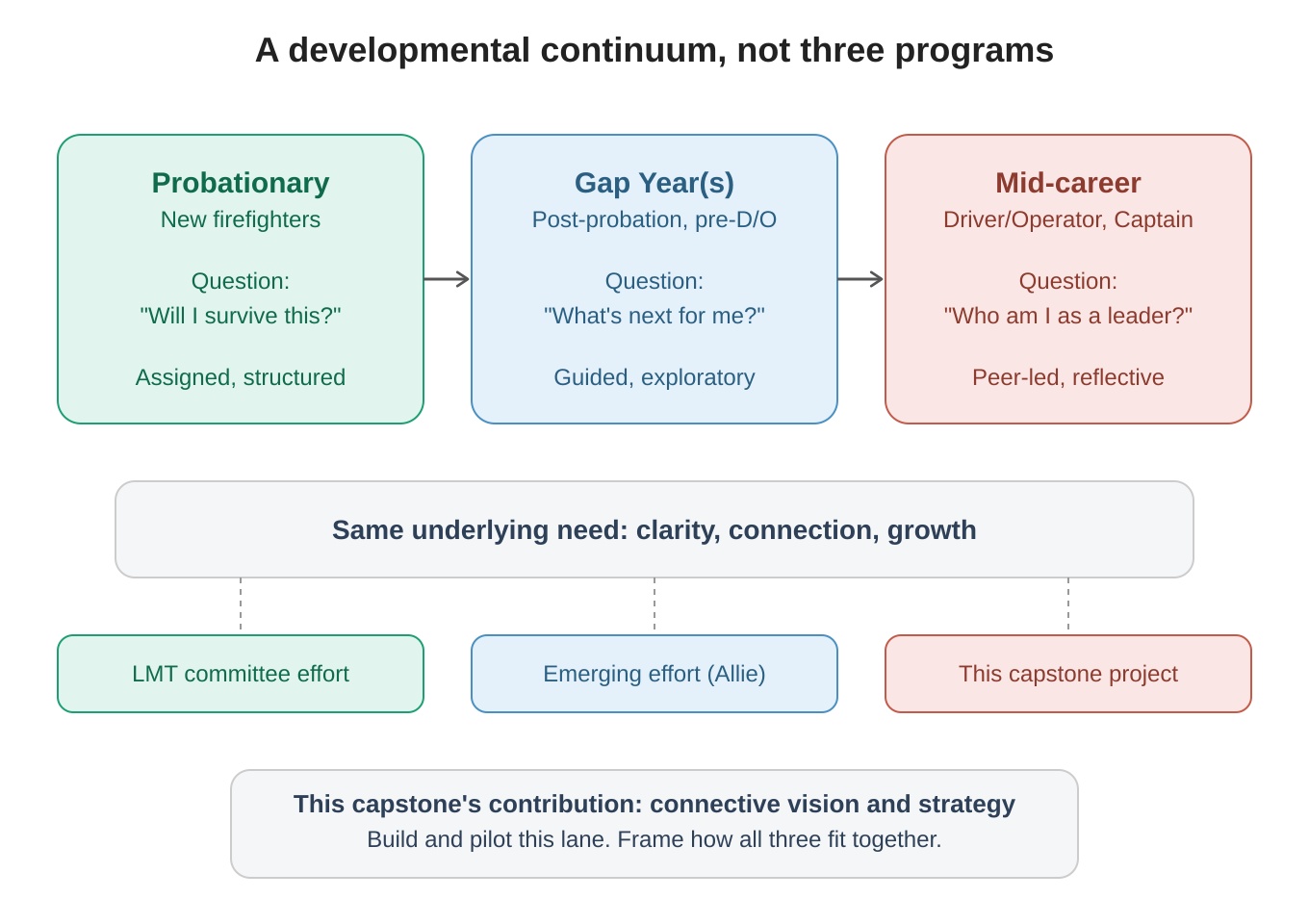
"Will I survive this?"
Assigned, structured. A pool of mentors rather than a rigid pairing — zone defense, not man-to-man.
"What's next for me?"
Guided, exploratory. Direction for personnel between probation and Driver/Operator eligibility.
"Who am I as a leader?"
Peer-led, reflective. Quarterly off-site gatherings — the lane this capstone built and piloted directly.
The pilot
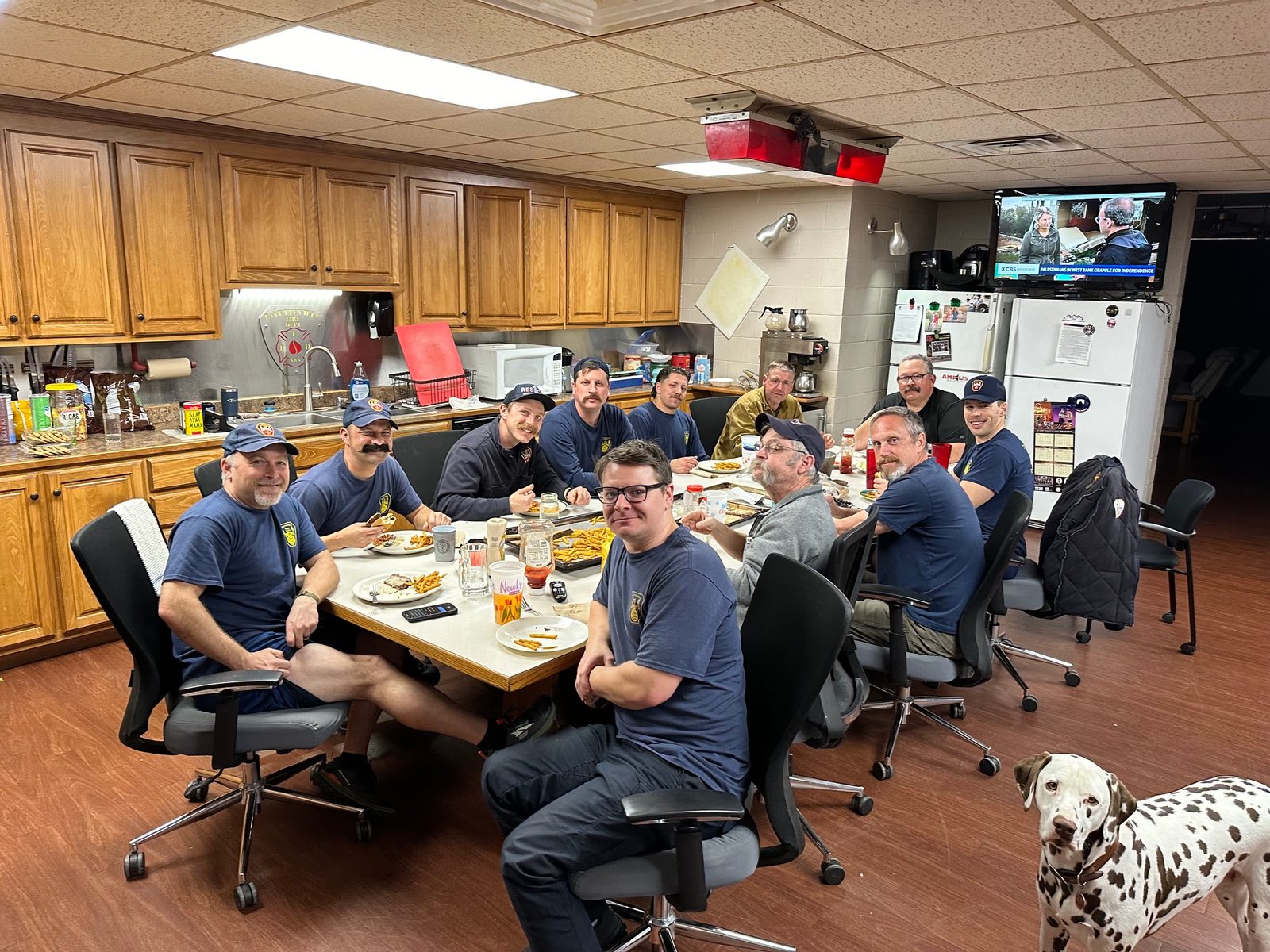
Two off-site sessions, twelve people across rank, both voluntary, both on personal time. Nobody was assigned to be there — and that alone told me something. Real findings shaped real design decisions: monthly became quarterly, straight from what people said they'd actually sustain. Assigned one-on-one pairing became a mentor pool, because a forced pair that doesn't click means the hard conversations never happen.
"The person messing up is always the last one to know. Nobody's told them, and there's no real structure behind that conversation." — Pilot participant, Session 1
Where it stands
Findings went to our strategic planning chief and fire chief informally, who fully support the evolution and expansion of our existing committee — which I co-chair — into a broader mentorship and development committee covering the full continuum. That expansion goes in front of the department's Labor Management Team on July 30th. A mentor preparation session is tentatively scheduled for late August, ahead of the next hiring class, which may become the first live run of the quarterly gathering model.
This project was never meant to end at submission. The gathering template and conversation guide were built so any peer could pick them up and run a session without me in the room. That's the actual measure of whether this worked.