What I fell short on, early in my career, was the relational depth necessary to practice something that actually fit for me. My military experience rewarded execution while starving introspection — the pace and tempo demanded it. What I neglected to examine found me in the end.
Northouse (2022) defines leadership as "a process whereby an individual influences a group of individuals to achieve a common goal." By that definition, I was leading. I was promoted, trusted with tasks, seen as effective. What I was missing was the search for understanding self — and in neglecting it, I was operating under someone else's purpose, disconnected from my own.
Leadership is possible to the extent that one can move beyond the parameters of a preferred framework to understand that such a framework is merely a partial view of what's possible in the organization. — Carey, 1999
My current profession afforded me something the military rarely offered — a pace slow enough to reflect. Graduate study deepened it further. A formal instrument, the Critical Skills Leadership Survey (ORGL 689), gave me a structured window into my own tendencies: strong on control and commitment, the hardiness dimensions that serve me well under operational pressure — and lowest on optimism and conflict navigation. Uncomfortable to sit with, but more confirming than surprising.
A call, a fatality, a shift
A vehicle fire during this same period brought it into clear view. Responding as a chief officer, we encountered a fatality on scene. My initial response was regressive — guarded, emotionally detached, focused purely on the operation. It worked, in the short term. But it ran counter to what my personnel actually needed. What followed was a deliberate shift toward holding space for junior firefighters to process openly, leading with my own vulnerability instead of my rank.
Hardiness is the path of engagement and active involvement in the world, instead of the relative safety of passive withdrawal. — Stein & Bartone, 2020
The mountain as a teacher
Last summer I joined a group of peers on Mt. Adams, Washington, for a Leadership & Hardiness class. Before the climb, three questions: What are you bringing to the mountain? What did you leave on the mountain? What are you taking forward?
Gathered around one another on night one, I named what I was bringing: energy, and a deep desire to see the people around me succeed. It was tested the next day at basecamp, when exhaustion settled over the team. What was needed wasn't a speech — it was a calm, quiet presence that held a light to the path forward.
The second test came roughly nine hundred feet below the summit. A teammate in front of me was walking slower, with a limp. I asked simply, "Are you okay?" She stopped. Tears streamed beneath her sunglasses in the cold wind. Others circled to help with the injury. What followed is now central to how I operate — I held space for her to decide whether to continue, her choice alone, my own desire to summit removed from the equation. She chose to continue. We finished safely. That was with, not at, in practice. My role wasn't to carry her forward. It was to be genuinely present so she could find her own version of forward.
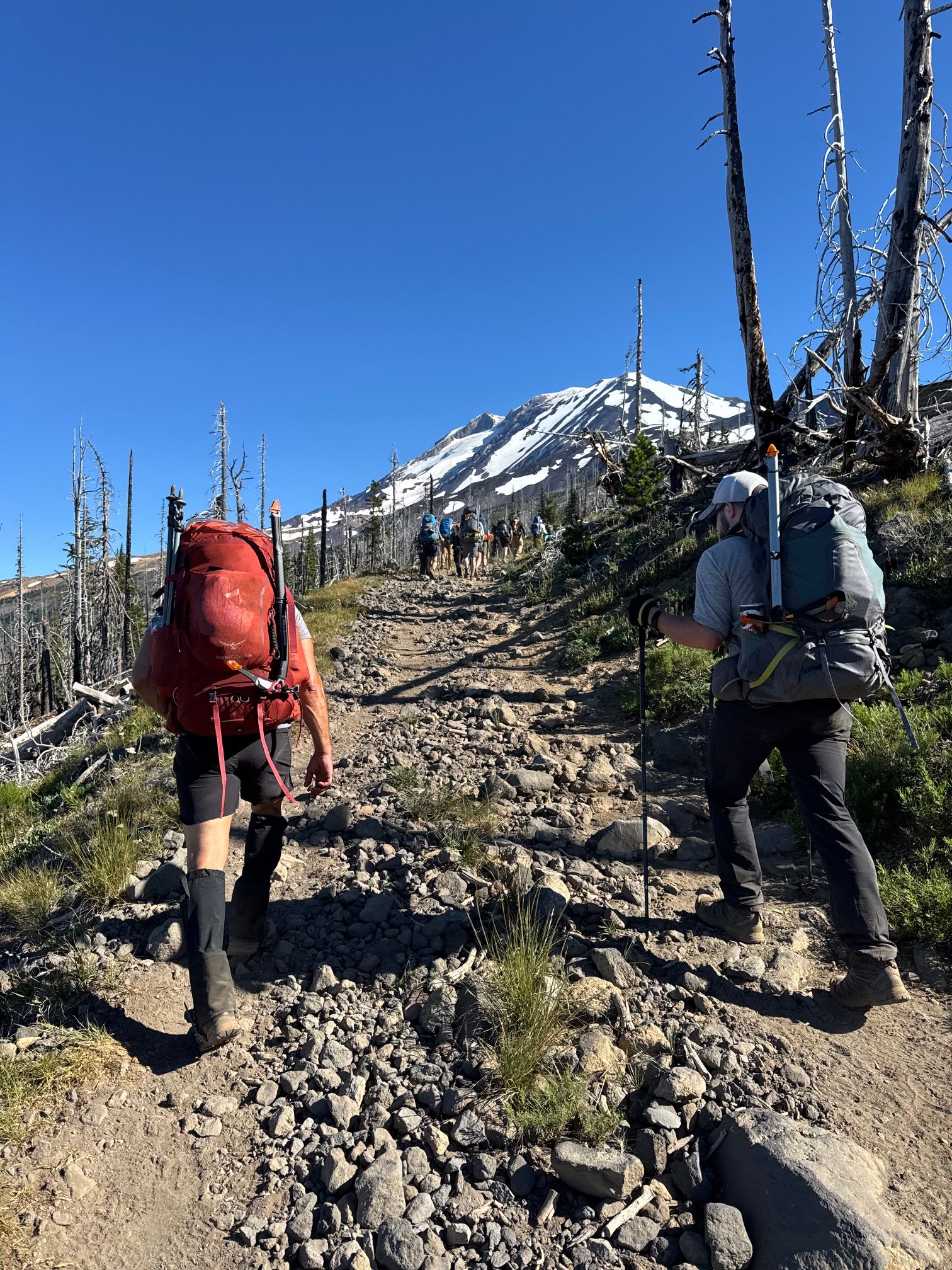
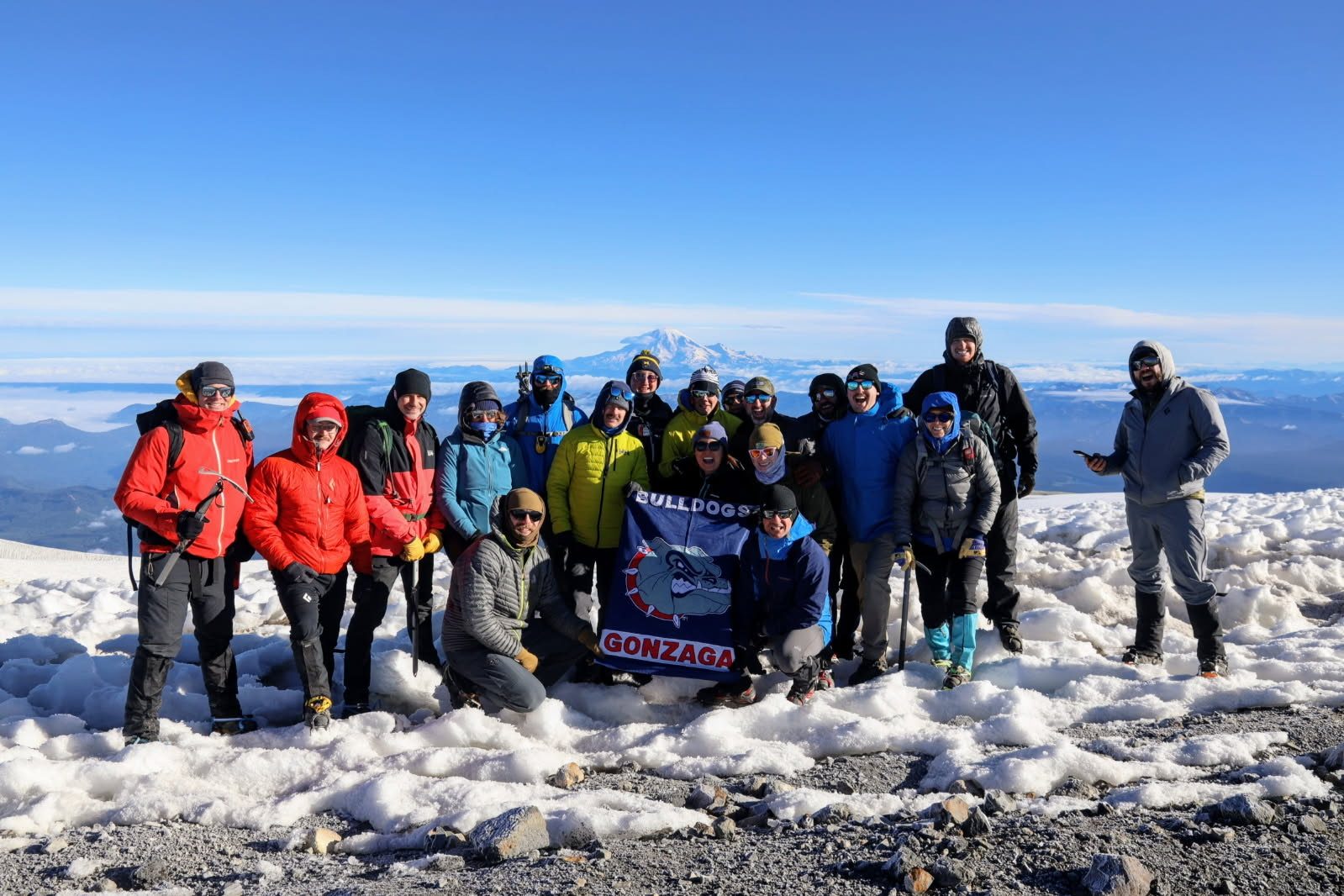
What did I leave on the mountain? An obsession with control — the need to manage outcomes instead of trusting the process. What I came off it with was clarity. Palmer (2017) writes that "good teachers join self and subject and students in the fabric of life." I wasn't leading a climb. I was simply being who I am, and that was enough.
Environment is integral to this philosophy — nature especially, because of its ability to teach outside the confines of the prescriptive. It's raw, indifferent to rank or credentials, and reveals who we actually are under the pressure of the unknown. Block (2018) frames authentic community as built through trust and intentionality — belonging over compliance, honest exchange over hierarchy.
My goals moving forward hold less weight on position and more on depth — presence alongside those I lead rather than distance from them. Thinking back to a younger self, rallying the neighborhood without understanding the why of it, I now understand: one of the most powerful things a leader can offer isn't direction from above. It's a presence alongside. A willingness to let the same forces changing others, change you.